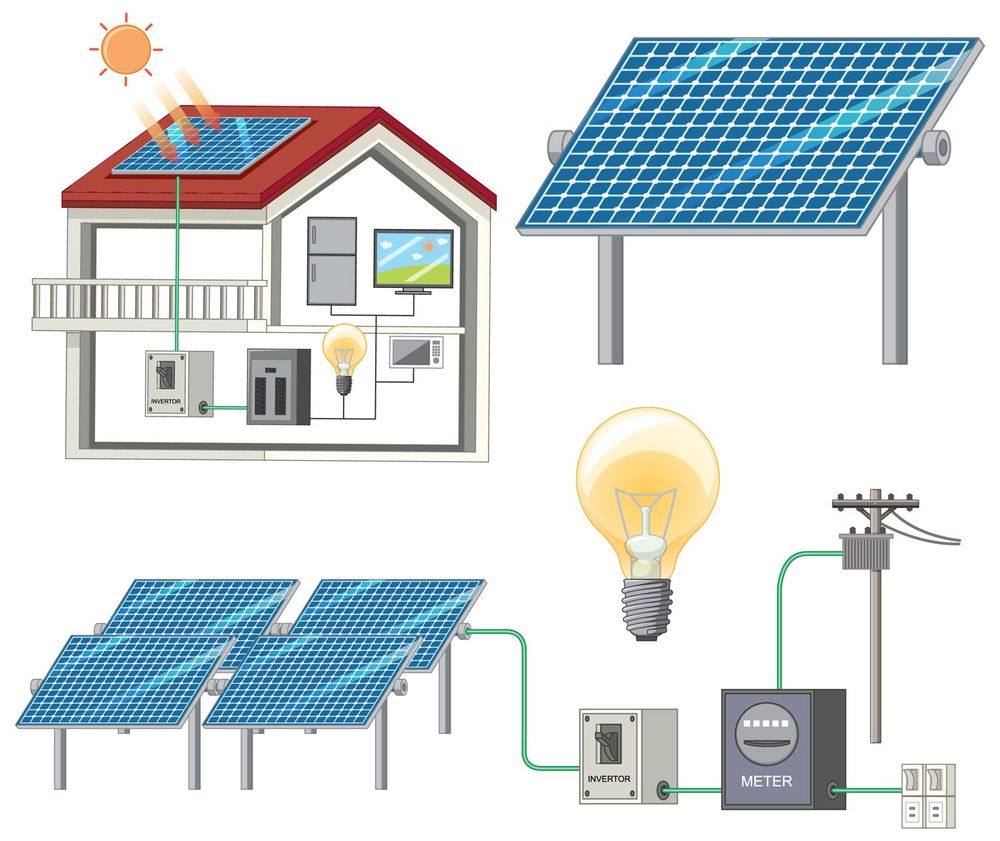
All three systems start with the same panels. What differs is what happens to the electricity afterwards, which decides the parts you need and how the system behaves when the grid fails. The system types page explains how each one works.
| Your situation | Usually the best fit |
|---|---|
| Reliable grid, you can sell or credit extra power | Grid-tied |
| Frequent outages, or high prices at peak hours | Hybrid with battery |
| No grid connection, or a grid too far to connect | Off-grid with batteries |
| A farm pump that only runs in daylight | Direct solar pumping, no battery |
Panels feed an inverter that powers your home first and sends extra to the grid. There is no battery, so this is the simplest and usually cheapest per watt. The catch: when the grid goes down, a standard grid-tied system shuts down too, for the safety of line workers.
A hybrid inverter adds a battery. Extra solar charges the battery before it goes to the grid, and the battery runs your essential circuits during an outage. It costs more than grid-tied but gives backup power and lets you use stored energy at expensive peak hours.
Panels, a charge controller, a battery bank and an inverter supply everything. It suits cabins, farms and remote sites, but it must be sized for the worst weather, so it needs more panels and a larger battery bank. A backup generator is common.
Rules differ by country and utility, so check local requirements and use a licensed installer. Next step: size the system and see matching kits.